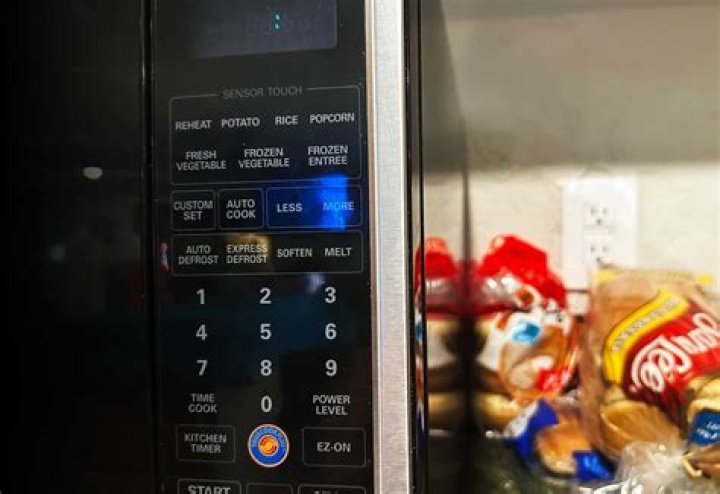
Does a microwave need to be plugged into a GFCI outlet?
Don't plug your microwave into a GFCI. Also, we don't know why it worked fine for years. Also you should probably have it plugged into a 20 amp outlet/circuit."Can I plug a microwave into a regular outlet?
Microwaves need a dedicated circuit for safe operation. It's not unrealistic to see a microwave plugged into a wall outlet, but some models need more power. Large microwaves can draw 1500 watt of power, which requires a dedicated circuit.Why does my microwave keep tripping my GFCI outlet?
If your microwave is plugged into a GFCI breaker outlet and it keeps tripping, the outlet itself may be at fault. Try resetting the GFCI outlet. If the GFCI keeps tripping, there could be something else on the circuit causing the problem or you may have a faulty GFCI. Try another outlet to see if the problem goes away.Does a microwave need to be on its own circuit?
Microwave ovens often demand dedicated circuitry, but this isn't always a necessity. The National Electrical Code requires it for all fixed equipment, so a circuit must be set aside for any built-in oven. Small or older countertop models draw less power than modern full-size units.Could my microwave have broken my kitchen GFCI outlets?
Does microwave need 20 amp outlet?
The microwave oven needs a dedicated 20-amp, the 120/125-volt circuit to feed it. This will require 12/2 NM wire with a ground. Microwave ovens come in different varieties and sizes. Some are countertop models, and other microwaves mount above the stove.Can a refrigerator and a microwave be on the same circuit?
According to the 2020 version of the NEC, you can't power a microwave and refrigerator on the same circuit because each of these appliances requires a dedicated circuit, which is one shared by no other appliances or lights.Why does my over the range microwave keep tripping the breaker?
The answer: The microwave is overloading the electrical circuit. In other words, the circuit is rated to handle a certain amount of amps (unit of electrical current), and the microwave is exceeding that amount, causing the breaker to trip.What would make a microwave trip the breaker?
Your Microwave Is Tripping Breaker On Startup
- There is an issue with the electricity supply to the appliance.
- The turntable motor is wet.
- The interference suppressor has blown.
- The door safety latch is broken.
- The magnetron has an electrical leak.
- The capacitor is faulty.
- The high voltage diode is short-circuiting.
When I open the microwave door it trips breaker?
Circuit OverloadThe microwave's internal parts are safe, but your breaker will be tripped. This happens when a microwave's power rating is too high and the appliance is plugged into the wrong wall plug type. A licensed electrician can help alleviate the issue, even with a range microwave oven.
Can I run a microwave on a 15 amp circuit?
Standard small microwave appliances will need a 10 amp circuit but can range from 15-20 amps.Can you plug a microwave into a surge protector power strip?
Rule two: never plug high power capacity appliances, like space heaters, refrigerators, or microwave and toaster ovens into power strips or extension cords. These appliances have higher power capacity and need to be plugged into a wall outlet directly.Is it OK to plug a microwave into an extension cord?
We strongly recommend that an extension cord not be used with a microwave due to potential safety hazards under certain conditions. Your microwave should be plugged into its own properly grounded, dedicated electrical outlet to prevent the flickering of the lights, blowing of a fuse or tripping of a circuit breaker.What kind of outlet should a microwave be plugged into?
The microwaves require a 120 volt, individual, properly grounded branch circuit with a 3 prong grounding type receptacle protected by a 15 or 20 amp circuit breaker or time-delay fuse. Over-the-Range microwave models should always be on a dedicated circuit.Should a refrigerator be plugged into a GFCI outlet?
Residential KitchenIn a dwelling unit (residential), GFCI protection is only required for kitchen receptacles that serve the countertop surfaces. There's no requirement to GFCI protect receptacles that serve a refrigerator. Unless the fridge is plugged into a countertop receptacle.
