Who developed free will?
One of the most prominent is the neuroscientist and writer Sam Harris, who, in his 2012 book, Free Will, set out to bring down the fantasy of conscious choice.Who said free will?
It is widely accepted that David Hume's contribution to the free will debate is one of the most influential statements of the “compatibilist” position, where this is understood as the view that human freedom and moral responsibility can be reconciled with (causal) determinism.Is free will biblical?
In the BibleThe biblical ground for free will lies in the fall into sin by Adam and Eve that occurred in their "willfully chosen" disobedience to God. "Freedom" and "free will" can be treated as one because the two terms are commonly used as synonyms.
Why free will is an illusion?
Free will is an illusion. Our wills are simply not of our own making. Thoughts and intentions emerge from background causes of which we are unaware and over which we exert no conscious control.Determinism vs Free Will: Crash Course Philosophy #24
What religions practice free will?
Free Will in Eastern Religions. Hinduism and Buddhism understand the haunting presence of karma that explains determinism. At the same time, they quite often acknowledge human free will. So, the question is how they can explain both together.Which philosophers wrote about free will?
Robert Waxman Ph. D. Over the past 2500 years, the concept of free will has been debated by some of the most brilliant minds in ancient and modern history.Does free will actually exist?
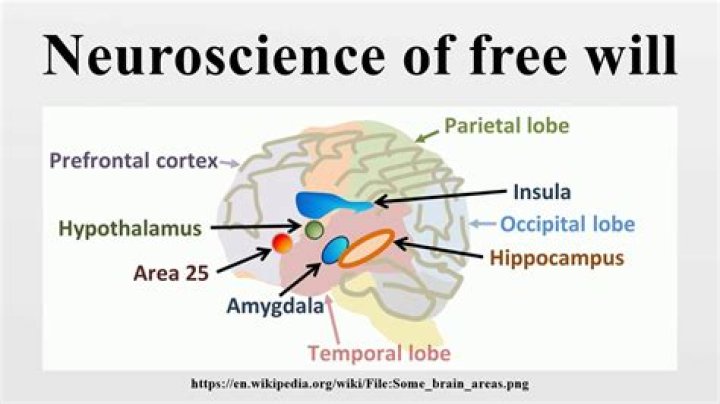
Neuroscientists identified a specific aspect of the notion of freedom (the conscious control of the start of the action) and researched it: the experimental results seemed to indicate that there is no such conscious control, hence the conclusion that free will does not exist.Do only humans have free will?
The free will that humans enjoy is similar to that exercised by animals as simple as flies, a scientist has said. The idea may simply require "free will" to be redefined, but tests show that animal behaviour is neither completely constrained nor completely free.What is the concept of free will?
free will, in philosophy and science, the supposed power or capacity of humans to make decisions or perform actions independently of any prior event or state of the universe.How many people believe free will?
The FWI allows us to count how many subjects agree with beliefs according to its three dimensions. In the US, the majority did believe in free will (82.33%), and only a minority believed in determinism (30.77%).What did Plato say about free will?
Plato believed that there is a constant battle with one's base desires. To achieve inner justice, an individual must liberate themselves from these impulses by acquiring the virtues of wisdom, courage, and temperance. Once an individual has mastered one's self, only then can that individual express free will.Does John Locke believe in free will?
John Locke took a 'hard determinist' position. This is the belief that moral agents have only preprogrammed choices, over which they have no control. A moral agent is not free to act — free will is no more than an illusion.What did Aristotle believe about free will?
1) According to the Aristotle, free will and moral responsibility is determined by our character. 2) According to absolute free will (indeterminism), free actions cannot be determined in any fashion. 3) Therefore, you cannot endorse Aristotle's view, and also affirm absolute free will.When did the doctrine of free will begin?
History of free willThe term "free will" (liberum arbitrium) was introduced by Christian philosophy (4th century CE). It has traditionally meant (until the Enlightenment proposed its own meanings) lack of necessity in human will, so that "the will is free" meant "the will does not have to be such as it is".
