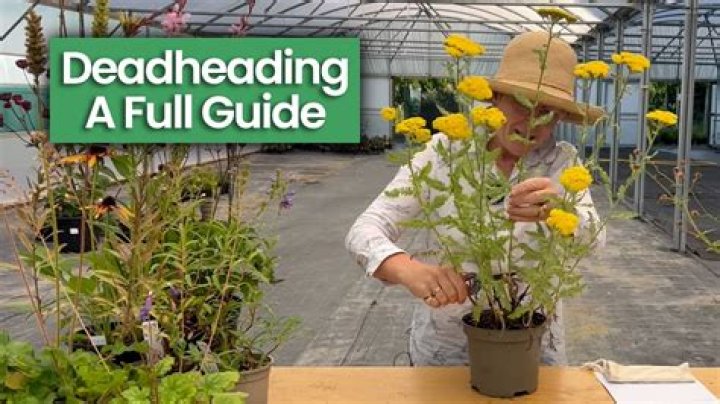
Plants that don't need deadheading
- Sedum.
- Vinca.
- Baptisia.
- Astilbe.
- New Guinea Impatiens.
- Begonias.
- Nemesia.
- Lantana.
Should all flowers be deadheaded?
Not all plants need to be deadheaded and in fact, the process could be detrimental to some. Repeat bloomers like cosmos and geraniums will continue to flower all summer if deadheaded regularly, but others, particularly perennials like hollyhock and foxglove, must reseed in order to bloom the following year.What happens if you don't deadhead plants?
Someone then realized that sterile plants, those that do not produce seed, will bloom continuously even when you don't deadhead. These plants keep on trying, unsuccessfully, to produce seed so they keep producing flowers. Rather frustrating for the plant, but easy for the gardener.Can you deadhead all perennials?
Deadheading perennials isn't difficult, only time consuming. Although deadheading is specific to each type of plant, all you really need to learn is to cut spent flowers back to a lateral bud or leaf. Only some plants will re-bloom after deadheading, but most will be better for it regardless.When Should I deadhead my plants?
If you spend at least a short time in the garden each day, your deadheading task will be much easier. Start early, around late spring, while there are only a few plants with faded flowers. Repeat the process every couple of days and the chore of deadheading flowers will lessen each time.Which Flowers to Deadhead or Not to Deadhead: Maximize Your Blooms Smartly and Sustainably
Should I deadhead hydrangeas?
You should deadhead throughout the blooming season to keep your hydrangeas looking their beast and encourage new flower growth. However, stop deadheading hydrangea shrubs in mid to late fall, leaving any spent blooms in place.Do you deadhead geraniums?
Without deadheading, the blooms have a tendency to become sparse, and they will eventually stop producing flowers. This technique also prevents the plant from forming new seeds. You should deadhead whenever your geranium blooms begin to look brown or weak.Should you deadhead marigolds?
The first and overwhelmingly large majority will say that, yes, you absolutely should deadhead. This is because marigolds don't respond very positively to fertilizers – they tend to get leggy and flop over – so it is the best and easiest way to ensure strong and consistent blooms.What happens if you don't deadhead roses?
Deadheading is the act of cutting off old blooms to encourage new ones. While roses will certainly bloom again if you don't deadhead, it is true they will rebloom quicker if you do.Is there a petunia that you don't have to deadhead?
Wave Petunia SeriesWave petunias grow only 6 inches tall but can spread to 4 feet. That feature would be enough to make them worth growing, but wave petunias also do not need deadheading.
Do all petunias need to be deadheaded?
Not all types of petunias need to be deadheaded. There are new hybrids these days that are self-cleaning and don't need any (or at least not as much) maintenance. Ask your local garden center if they carry any self-cleaning petunia varieties, or look at the details on the plant tag.Do you deadhead clematis?
You can definitely deadhead clematis, especially first blooms. In fact, when deadheading your clematis you can remove as much as 12 to 18 inches (31-46 cm) of stem. Doing this can help give the plant new life and ensure the growth of new flowers.What flowers do you have to deadhead?
Flowers That Benefit from Deadheading
- Zinnia.
- Cosmos.
- Marigolds.
- Delphiniums.
- Hollyhocks.
- Marguerite daisy.
- Hardy geraniums.
- Petunias.
